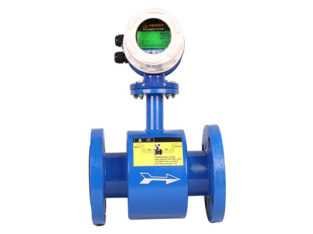
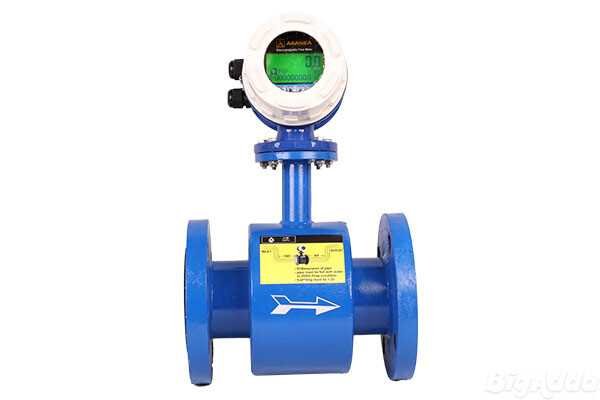

Accurate liquid-flow measurement is important for controlling industrial processes, reducing wastage and maintaining product quality. An Electromagnetic Flow Meter provides reliable measurement for conductive liquids without creating major pressure loss in the pipeline.
Aranka Instruments LLP manufactures electromagnetic flow meters for water, wastewater, chemicals, food processing, pharmaceuticals, mining, pulp and paper and other industrial applications.
What Is an Electromagnetic Flow Meter?
An electromagnetic flow meter, also called a magmeter, measures the flow rate of electrically conductive liquids. It can be used for water, wastewater, acids, alkalis, chemicals, slurries, milk, beverages and other conductive process liquids.
These meters are not suitable for non-conductive media such as oil, gas and distilled water.
How Does an Electromagnetic Flow Meter Work?
An electromagnetic flow meter operates according to Faraday’s Law of Electromagnetic Induction. When a conductive liquid passes through a magnetic field, it generates a voltage.
Electrodes inside the meter detect this voltage. The transmitter then uses the detected signal, liquid velocity and pipe diameter to calculate the volumetric flow rate.
The meter does not use rotating components inside the flow path. This allows liquid to pass through the meter with minimal obstruction.
Benefits of Electromagnetic Flow Meters
- Accurate and repeatable liquid-flow measurement
- Full-bore design with minimal pressure loss
- No moving mechanical parts
- Low maintenance requirements
- Suitable for corrosive and abrasive liquids
- Local and remote transmitter options
- Easy connection with PLC and SCADA systems
- Stable measurement under changing process conditions
- Suitable for different pipe sizes and process connections
The absence of moving parts also reduces mechanical wear and supports long-term operation.
Industrial Applications
Water and Wastewater
These meters are used for water distribution, sewage treatment, sludge transfer, leakage monitoring and pipeline measurement.
Chemical Processing
Suitable liner and electrode materials allow the meter to measure acids, alkalis, dosing liquids and other conductive chemicals.
Metals and Mining
Electromagnetic meters can measure mud, slurry, ores and liquids containing suspended solids.
Food and Beverage
Hygienic models can support beverage mixing, batching, dosing and filling applications.
Pharmaceutical Industry
Electromagnetic flow meters can monitor conductive liquids used in pharmaceutical manufacturing and process-control systems.
Pulp and Paper
These meters are suitable for pulp, paste, caustic solutions, additives, bleaches and colourants.
Important Selection Factors
The correct flow meter should be selected according to actual operating conditions. Important factors include:
- Pipe diameter
- Minimum and maximum flow rate
- Liquid conductivity
- Chemical composition
- Process temperature
- Operating pressure
- Presence of suspended solids
- Liner compatibility
- Electrode compatibility
- Required output signal
- Local or remote display requirements
- Process connection type
Providing complete application information helps the manufacturer recommend a suitable meter configuration.
Aranka Instruments Electromagnetic Flow Meter
Aranka Instruments LLP offers electromagnetic flow meters with line sizes from 20 NB to 300 NB. Available electrode materials include SS 316, Hastelloy C, titanium and tantalum.
Lining options include PTFE, FEP and hard rubber. Customers can select local or remote transmitter mounting depending on the installation environment.
Available outputs include 4–20 mA analogue output and RS-485 Modbus RTU communication. Process connections include DIN flanges, ANSI flanges and Tri-Clamp options.
The meters support a maximum pressure of up to 15 bar and process temperatures ranging from approximately minus 20°C to 120°C, depending on the selected configuration.
Installation Guidelines
Correct installation is important for reliable flow measurement. The pipeline should remain completely filled while the meter is operating.
Adequate straight-pipe distance should be maintained before and after the meter whenever required. Proper grounding is also essential for stable signal measurement.
The flow direction marked on the meter should match the actual pipeline flow. Air pockets, partially filled pipes and heavy vibration should be avoided.
Maintenance and Calibration
Electromagnetic flow meters require relatively low maintenance because they contain no moving parts. However, regular inspection is still recommended.
The electrodes should be checked for coating or deposits when measuring dirty liquids. Wiring, grounding and process connections should also be inspected periodically.
Calibration checks help confirm that the instrument continues to provide accurate and reliable results.
Why Choose Aranka Instruments?
Aranka Instruments LLP provides flow measurement solutions based on process conditions and application requirements. Its team supports product selection, manufacturing, testing, installation integration and calibration services.
The company also offers flow meter calibration, annual maintenance contracts, on-site testing, technical support and documentation services.
Conclusion
An Electromagnetic Flow Meter provides an effective solution for measuring conductive liquids in industrial pipelines. Correct selection, installation, grounding and calibration can improve measurement accuracy and process reliability.
Visit Aranka Instruments LLP to explore electromagnetic flow meter specifications and discuss your application requirements.