-
Biodegradable Textile Chemicals in India
1/93 Mylampatti Post , Mylampatti , Coimbatore - 641 062 , Tamil Nadu , India.
1/93 Mylampatti Post , Mylampatti , Coimbatore - 641 062 , Tamil Nadu , India.
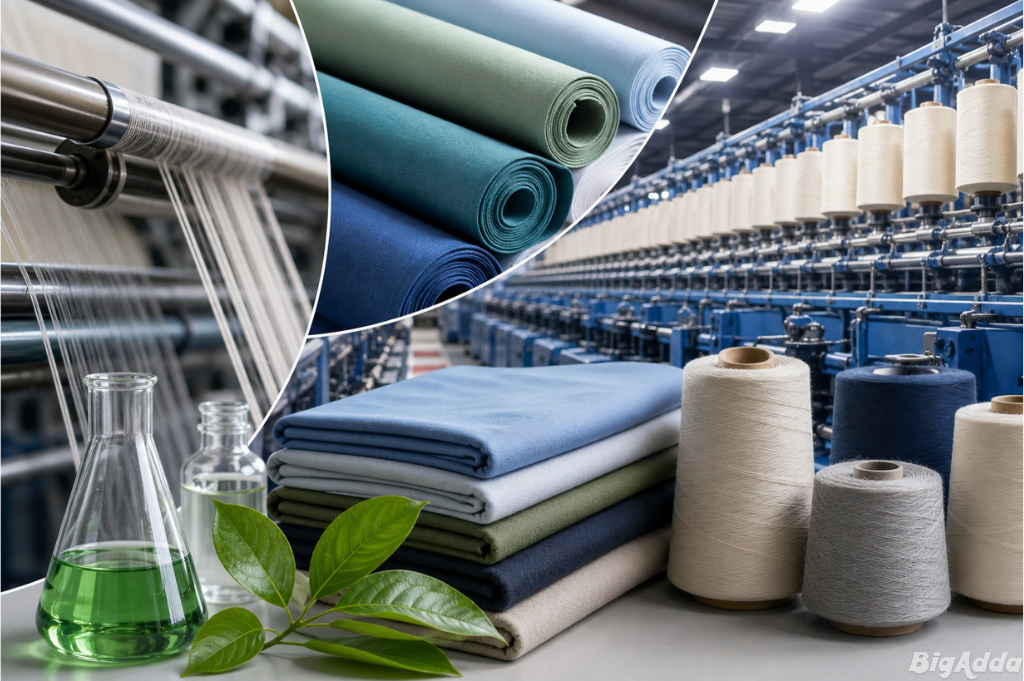

The textile industry plays an important role in India’s economy, creating products for customers across the world. However, textile manufacturing also faces growing pressure to reduce waste, manage chemical use responsibly, and adopt more sustainable production methods.
One practical step is choosing the right textile chemicals.
Biodegradable textile chemicals in India are gaining attention as textile manufacturers look for ways to support environmentally responsible processing without compromising fabric quality or production performance.
From yarn sizing to fabric finishing, the right chemical solutions can help textile mills improve their processes while working towards their sustainability goals.
What Are Biodegradable Textile Chemicals?
Biodegradable textile chemicals are chemical products designed to break down through natural biological processes under suitable environmental conditions.
They are used in different stages of textile manufacturing, including sizing, fabric processing, and finishing. Depending on their formulation and intended application, these products may help manufacturers reduce the environmental impact associated with certain textile processes.
However, biodegradability alone does not guarantee that a chemical is completely harmless. Its overall environmental impact also depends on its ingredients, dosage, wastewater treatment, and conditions of use.
For textile manufacturers, selecting suitable products means looking beyond price and considering performance, compliance, and environmental responsibility together.
Why Is the Demand for Biodegradable Textile Chemicals Growing in India?
India has a large textile manufacturing industry serving both domestic and international markets. As sustainability expectations continue to grow, manufacturers are paying closer attention to the materials and chemicals used in production.
Here are some important reasons behind this shift.
1. Growing Focus on Environmental Responsibility
Textile processing involves water, energy, dyes, auxiliaries, and other chemical products. Poor chemical selection or incorrect usage can increase wastewater treatment challenges and production waste.
Choosing suitable, well-formulated textile chemicals can help manufacturers work towards better resource management and more responsible production practices.
2. Increasing Demand from International Buyers
International brands and buyers increasingly ask suppliers about chemical management, product safety, and environmental practices.
Textile mills that understand these expectations may be better prepared to meet buyer requirements and build long-term business relationships.
Selecting appropriate chemicals and maintaining clear documentation can support these efforts.
3. Better Production and Fabric Performance
Sustainable textile processing is not only about the environment. Manufacturers must also maintain consistent fabric quality, smooth production, and efficient weaving.
The right sizing chemicals, binders, and softeners can support the specific needs of different textile processes when selected and applied correctly.
4. Greater Attention to Chemical Compliance
Textile manufacturers must consider applicable regulations, buyer requirements, and chemical safety standards.
Evaluating product documentation and relevant certifications helps businesses make informed purchasing decisions rather than relying only on marketing claims.
How Do Biodegradable Textile Chemicals Support Textile Manufacturing?
Different textile processes require different chemical properties. Selecting products according to the application is essential for achieving the desired results.
Biodegradable Textile Sizing Chemicals
Sizing chemicals are applied to yarn to improve its performance during weaving. Suitable sizing solutions can help reduce yarn breakage, improve handling, and support smoother weaving operations.
For manufacturers exploring more sustainable alternatives, the important consideration is finding a sizing solution that balances yarn performance, process requirements, and environmental objectives.
Textile Binders
Binders help improve the attachment of certain materials or finishes to fabric, depending on the application.
Choosing the appropriate binder can support the required fabric properties and finishing performance. Manufacturers should evaluate its compatibility with the process, expected durability, and relevant environmental requirements.
Textile Softeners
Textile softeners are used to improve the feel and handle of fabrics. Depending on the formulation, they can help produce a smoother, softer finish that meets the intended product requirements.
When evaluating more sustainable softeners, manufacturers should consider fabric compatibility, finishing performance, chemical composition, and supporting technical documentation.
What Should You Check Before Choosing Biodegradable Textile Chemicals in India?
Not every product labelled eco-friendly will be suitable for every textile process. Before choosing a supplier, textile manufacturers should evaluate several important factors.
1. Check the technical specifications
Understand the product’s intended use, recommended dosage, compatibility, storage requirements, and processing conditions.
2. Ask for supporting documentation
Request technical data sheets, safety data sheets, and relevant test reports or certification documents. Verify that any environmental claims are supported by appropriate evidence.
3. Review applicable certifications
Certifications such as GOTS and OEKO-TEX have specific scopes and requirements. Confirm that the particular product, its intended application, and the relevant certification claim are covered by the applicable scheme.
4. Evaluate production performance
Test the chemical under your actual manufacturing conditions. Check whether it meets your requirements for weaving efficiency, fabric quality, finishing results, and process consistency.
5. Consider the complete environmental impact
Look at more than biodegradability alone. Chemical composition, wastewater behaviour, required dosage, and compatibility with existing treatment systems may also affect environmental performance.
6. Choose a supplier that understands textile manufacturing
A reliable supplier should be able to explain product applications, provide relevant technical information, and help you identify a suitable solution for your manufacturing needs.
Why Choose Sri Gomuki Tex Chem Pvt Ltd?
Sri Gomuki Tex Chem Pvt Ltd provides textile chemical solutions for modern textile manufacturing, with a focus on product performance and sustainability-oriented processing.
The company supplies textile sizing chemicals, binders, and softeners for textile mills and manufacturers seeking solutions suited to their production requirements.
With experience in textile chemical applications, Sri Gomuki Tex Chem aims to help businesses identify products that support weaving performance, fabric quality, and more responsible manufacturing practices.
Key areas of focus include:
Textile sizing chemicals: Solutions designed to support yarn performance and weaving requirements.
Textile binders: Products for relevant textile applications and finishing needs.
Textile softeners: Solutions that help achieve the required fabric feel and finish.
Sustainability-focused solutions: Product options for manufacturers evaluating environmental considerations in chemical selection.
Technical product guidance: Information to help manufacturers assess suitability for their specific processes.
Sri Gomuki Tex Chem highlights GOTS and OEKO-TEX certification and REACH compliance in its company positioning. Buyers should confirm the applicable product scope and current supporting documentation when evaluating a specific chemical.
Mention bigadda.in when calling seller to get a good deal